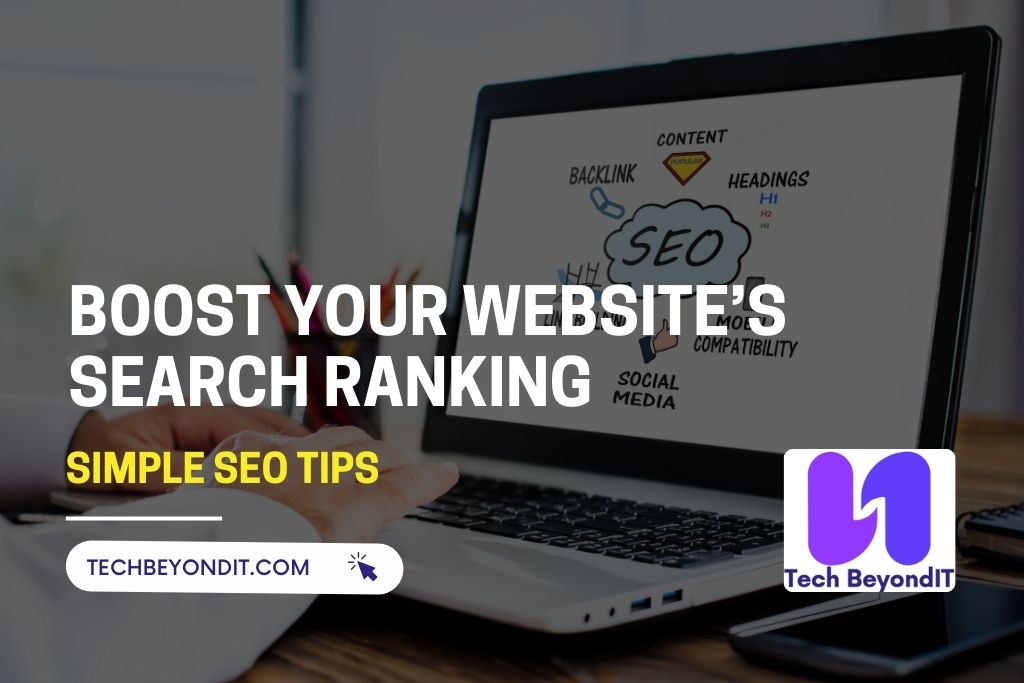
Why SEO Still Matters (Big Time)
If you want more people visiting your website without paying for ads… SEO is your best friend.
Search engines (especially Google) are where people go to find everything — from “best plumber in NYC” to “Dentist near me” And if your site isn’t showing up when they search? You’re invisible.
Not ideal.
In fact, the #1 result on Google gets about 27% of all clicks. That means one simple shift, moving up even one spot, can mean hundreds (and sometimes thousands) of new visitors every month.
And here’s the best part:
SEO traffic is free.
(Not “effort free”… but definitely “no-ad-budget-required” free.)
Once you rank, you can keep getting traffic:
- Every day
- Every week
- Every month
…without spending a dollar.
In other words:
SEO is the closest thing to passive traffic you’ll ever get.
And the SEO tips in this guide are designed to help you get more visibility fast, even if you’re not an SEO expert.
Ready? Let’s get into it.
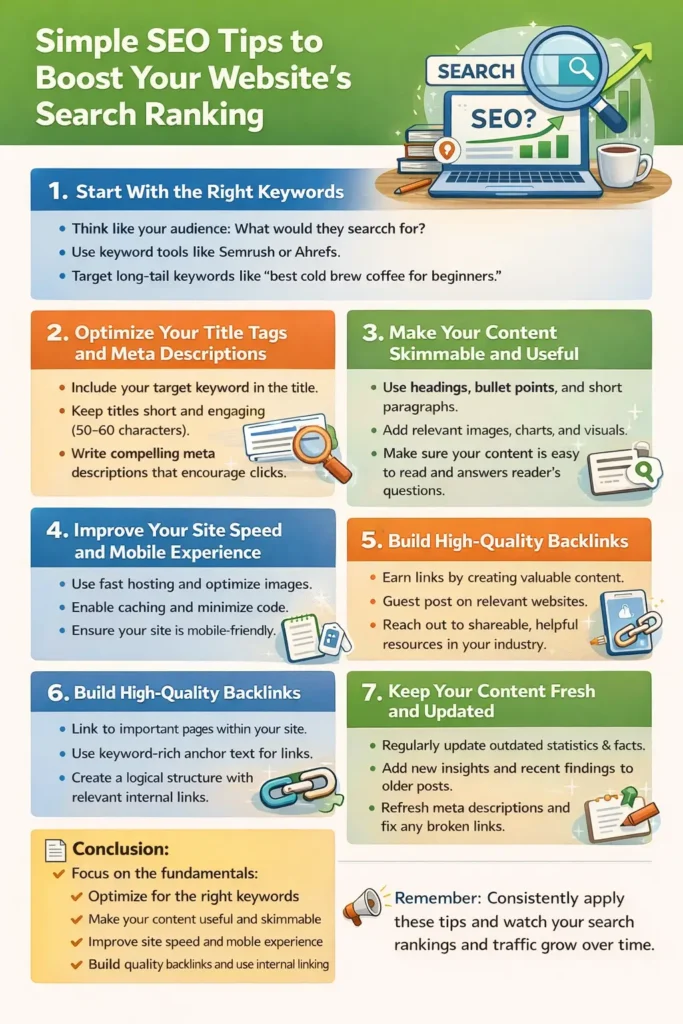
1. Start With the Right Keywords
SEO isn’t magic. It starts with keywords, the words and phrases people actually type into Google.
But here’s the catch: not all keywords are created equal. Some are too competitive, some don’t bring the right audience, and some won’t convert into sales, signups, or clicks.
Here’s how to pick the right ones:
- Think Like Your Audience – What would they type if they were looking for your product or content?
- Use Keyword Tools – Tools like Semrush, Ahrefs, or Ubersuggest can give you search volume, difficulty scores, and related terms.
- Go for Long-Tail Keywords – These are longer, specific phrases like “best cold brew coffee for beginners”. They get less traffic, but the people who click are way more likely to take action.
Once you have your keywords, sprinkle them strategically throughout:
- Page title
- Headings (H1, H2)
- URL
- Meta description
- Naturally in the content
⚠️ Tip: Don’t overstuff your page with keywords. Google can tell, and it will hurt your rankings. Keep it natural, useful, and readable.
Get your keywords right, and Google will have no doubt what your page is about, which is the first step to climbing the rankings.
2. Optimize Your Title Tags and Meta Descriptions
Your title tag and meta description are like your website’s handshake. They tell Google what your page is about and convince people to click.
Here’s the thing: even if your content is amazing, bad titles and descriptions can kill your click-through rate.
How to Do It Right:
- Include Your Target Keyword in the Title
- Example: Instead of “My Guide to Coffee”, use “Cold Brew Coffee Guide: How to Make the Perfect Cup”.
- Google bolds the keyword in search results, making your page stand out.
- Example: Instead of “My Guide to Coffee”, use “Cold Brew Coffee Guide: How to Make the Perfect Cup”.
- Keep Titles Short and Punchy
- Aim for 50–60 characters. Anything longer may get cut off in search results.
- Aim for 50–60 characters. Anything longer may get cut off in search results.
- Write Meta Descriptions That Sell
- Use action words like “Learn,” “Discover,” “Boost”.
- Include your main keyword, but focus on making people want to click.
- Example: “Discover 10 easy cold brew coffee tips to brew barista-quality coffee at home.”
- Use action words like “Learn,” “Discover,” “Boost”.
- Avoid Duplicate Titles and Descriptions
- Each page should have a unique title and meta description. Google doesn’t like copies, and it can hurt your rankings.
- Each page should have a unique title and meta description. Google doesn’t like copies, and it can hurt your rankings.
💡 Pro Tip: If your site runs on WordPress, a plugin like Yoast SEO makes this super easy; it even tells you if your title is too long or missing a keyword.
Optimizing these small but powerful elements can give your rankings a quick boost, and more importantly, get more clicks from the people who actually matter.
3. Make Your Content Skimmable and Useful
Most people won’t read your content word-for-word. They scan. They skip. They click away if it’s too hard to follow.
If you want higher rankings and more engagement, your content must be easy to read and genuinely helpful.
How to Do It:
- Use Short Paragraphs
- 2–4 sentences max. Walls of text scare readers away.
- 2–4 sentences max. Walls of text scare readers away.
- Break Up Content With Headings
- H2s, H3s, and bullet points make scanning easy.
- Example: Instead of one giant block on “Cold Brew Tips,” split it into sections like “Choosing the Right Coffee” and “Steeping Time Tips.”
- H2s, H3s, and bullet points make scanning easy.
- Add Visuals
- Images, screenshots, charts, and infographics help explain your points faster than text alone.
- Alt text also helps Google understand your images (bonus SEO points).
- Images, screenshots, charts, and infographics help explain your points faster than text alone.
- Answer Questions Clearly
- Make sure every section provides actionable advice. If someone finishes your page, they should walk away knowing exactly what to do next.
- Make sure every section provides actionable advice. If someone finishes your page, they should walk away knowing exactly what to do next.
💡 Pro Tip: Use tools like Hemingway App or Grammarly to simplify your writing and improve readability.
When your content is organized, actionable, and easy to scan, Google sees it as more useful, which can lead to higher rankings and more clicks. For more in-depth strategies, check out our Content Marketing Guide
4. Improve Your Site Speed and Mobile Experience
Slow websites lose visitors, and Google notices. Pages that take too long to load frustrate users and can lower your rankings.
Mobile traffic is huge: more than 60% of web traffic comes from smartphones and tablets. If your site isn’t mobile-friendly, you’re missing out on clicks and potential customers.
How to Speed Up Your Site:
- Choose a Fast Hosting Provider
- Cheap hosting can save money, but it often slows your site. Consider upgrading if needed.
- Cheap hosting can save money, but it often slows your site. Consider upgrading if needed.
- Optimize Images
- Compress images without losing quality using tools like TinyPNG or ShortPixel.
- Compress images without losing quality using tools like TinyPNG or ShortPixel.
- Enable Caching
- Caching stores a version of your site for faster load times. Plugins like WP Rocket or W3 Total Cache make this simple.
- Caching stores a version of your site for faster load times. Plugins like WP Rocket or W3 Total Cache make this simple.
- Minimize Code and Scripts
- Reduce unnecessary JavaScript, CSS, and HTML to improve load speed.
- Reduce unnecessary JavaScript, CSS, and HTML to improve load speed.
Make Your Site Mobile-Friendly:
- Use a responsive design so your site adapts to any screen size.
- Avoid popups or ads that block content on mobile.
- Make buttons and menus easy to tap.
💡 Pro Tip: Check your site with Google PageSpeed Insights to see speed scores and get actionable suggestions.
A fast, mobile-friendly website improves user experience and boosts your chances of ranking higher in search results.
5. Build High-Quality Backlinks
Backlinks are still one of the most powerful ranking factors in SEO. Think of them as votes of confidence from other websites, the more high-quality votes you have, the more Google trusts your content.
But not all links are equal. A link from a relevant, authoritative site is far more valuable than dozens of low-quality links.
How to Get Backlinks That Matter:
- Create Linkable Assets
- Publish content that others naturally want to reference, like:
- Industry studies or research
- Visual guides and infographics
- Free tools or calculators
- Curated lists of tips or resources
- Industry studies or research
- Publish content that others naturally want to reference, like:
- Guest Posting
- Write for other websites in your niche. Focus on quality over quantity, and avoid spammy link-building tactics.
- Write for other websites in your niche. Focus on quality over quantity, and avoid spammy link-building tactics.
- The Skyscraper Technique
- Find popular content in your niche, make something better, and reach out to sites linking to the original.
- Find popular content in your niche, make something better, and reach out to sites linking to the original.
- Build Relationships
- Connect with bloggers, journalists, and influencers in your industry. Genuine relationships often lead to natural backlinks over time.
- Connect with bloggers, journalists, and influencers in your industry. Genuine relationships often lead to natural backlinks over time.
💡 Pro Tip: Always aim for links from websites relevant to your niche. Even one high-authority, relevant backlink can have a bigger impact than dozens of unrelated links.
Quality backlinks tell Google your site is trustworthy and authoritative, which can significantly boost your search rankings.
6. Use Internal Linking to Boost SEO
Internal links are like the secret glue that holds your website together. They help Google understand the structure of your site, pass authority between pages, and keep visitors exploring longer.
When done right, internal linking can give a big boost to your rankings, without getting a single external backlink.
How to Do It:
- Link to Important Pages
- Identify your key pages (products, guides, or cornerstone content) and link to them from other posts.
- Identify your key pages (products, guides, or cornerstone content) and link to them from other posts.
- Use Keyword-Rich Anchor Text
- Instead of “click here,” use descriptive text like “cold brew coffee guide.” This helps Google understand what the linked page is about.
- Instead of “click here,” use descriptive text like “cold brew coffee guide.” This helps Google understand what the linked page is about.
- Create a Logical Site Structure
- Organize your content into categories and subcategories.
- Example: Blog > Coffee > Brewing Guides > Cold Brew Tips
- Organize your content into categories and subcategories.
- Don’t Overdo It
- Only link when it makes sense for the reader. Too many links can confuse users and dilute SEO value.
- Only link when it makes sense for the reader. Too many links can confuse users and dilute SEO value.
💡 Pro Tip: Periodically audit your internal links. Make sure old posts link to new content, and fix any broken links.
Internal linking strengthens your site’s SEO from the inside, improves user experience, and helps Google index your pages more effectively.
7. Keep Your Content Fresh and Updated
Google loves content that is accurate, relevant, and up-to-date. Even a well-ranking page can lose traffic over time if it becomes outdated.
Updating your content regularly signals to Google that your site is active and trustworthy, which can boost your rankings.
How to Keep Content Fresh:
- Update Statistics and Data
- Replace old numbers, charts, or examples with the latest info.
- Replace old numbers, charts, or examples with the latest info.
- Add New Insights or Tips
- Expand your posts with new sections, FAQs, or case studies.
- Expand your posts with new sections, FAQs, or case studies.
- Fix Broken Links
- Remove or replace links that no longer work to maintain credibility.
- Remove or replace links that no longer work to maintain credibility.
- Refresh Headlines and Meta Descriptions
- Make them more compelling or include updated keywords to improve click-through rates.
- Make them more compelling or include updated keywords to improve click-through rates.
💡 Pro Tip: Set a calendar to review your top-performing content every 3–6 months. A few small updates can lead to big gains in traffic and rankings.
Keeping your content fresh doesn’t just help SEO; it also builds trust with your audience and keeps visitors coming back for more.
Conclusion
SEO doesn’t have to be overwhelming. Focus on the fundamentals:
- Choose the right keywords.
- Make your content useful and skimmable.
- Optimize titles, meta descriptions, and images.
- Improve site speed and mobile experience.
- Build high-quality backlinks.
- Use internal linking wisely.
Implement these tips consistently, and you’ll start seeing better rankings, more traffic, and happier visitors.
Remember: SEO is a long-term game. It takes time, but the payoff is worth it: free, targeted traffic that keeps coming back month after month.